
After Dark

Planning advice from our side of the kitchen door, for anyone hosting an event, whether or not we’re the ones catering it.

All stories

Before you fall in love with a venue, ask these five questions.

A room can look perfect on a tour and still be hard to cater in. Here’s what to ask before you sign.
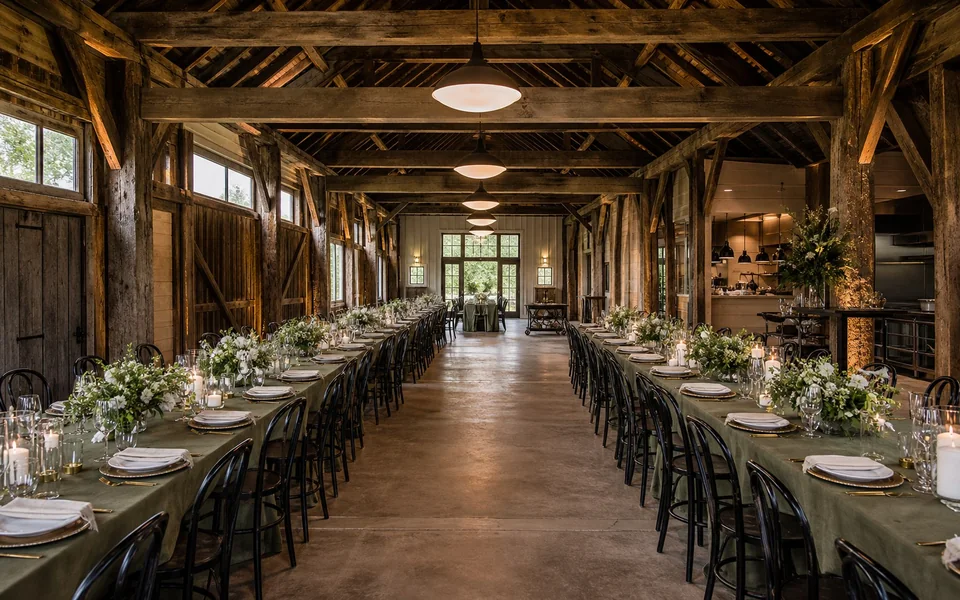
A warmly lit barn prepared for a wedding reception

On a venue tour, it’s easy to picture the flowers, the first toast, and the light through the windows. Save a few minutes for the less photogenic parts: where guests park, where the kitchen is, and what happens if it rains.

You don’t need every answer on the first visit. These five questions cover most of what your caterer will want to know.

1. How do guests get in?

Walk from the parking lot or drop-off point to where the event will be. Think about guests with walkers or wheelchairs, parents with strollers, and anyone who has never been there before. Ask which entrances are accessible and whether there’s signage.

Then picture everyone arriving at once. A place to hang coats and a short walk to the first drink make the first twenty minutes a lot calmer.

2. Where can the catering team work?

A gorgeous dining room doesn’t tell you much about the kitchen behind it. Ask what prep space there is, what equipment comes with it, and what time the caterer can get in. Bring your caterer on a walkthrough if you can; they’ll know quickly whether the space suits the menu you want.

Ask about the route from the kitchen to the tables, too. Stairs, narrow doorways, and long hallways can change how a meal gets served. None of that should rule out a place you love. It’s just something to plan around.

3. What’s the rain plan?

If any part of the event is outside, ask to see the backup space. Picture your full guest list in it, plus the buffet or bar, and check that people can still move around. Find out when the weather call gets made and who makes it.

It’s much easier to relax about a rain plan you’ve actually seen.

4. What comes with the room?

Ask for a written list of what the venue provides: tables, chairs, linens, plates, glassware. Anything not on it has to be rented by someone, so decide who. And be careful with the photos on the venue’s website. The chairs you liked may have been rentals.

Send that list to your planner and caterer early. It’s the fastest way to find the gaps while there’s still time to fill them.

5. When do you have to be out?

Ask about the hard end time, any noise or music rules, when gifts and decorations have to be collected, and how long vendors have to clear out. If guests will need rides home, sort that out now too.

None of these questions is glamorous, but the answers shape the whole day. Ask them before you sign, and the rest of the planning gets a lot easier.

Tell us about your event

All stories

What to serve when guests are standing, talking, and holding a drink.

A server carrying a tray of small bites

At a wedding, cocktail hour is often when the couple is off taking photos and everyone else is meeting for the first time. The food can do a lot to make that hour pleasant.

Before picking dishes, think about the setup. Will people be standing or sitting? Are they coming straight from a ceremony, or from work? Is dinner right after, or is this most of what they’ll eat?

Plan the bites as a set.

A good spread has some contrast: something light next to something rich, or a familiar favorite next to something guests wouldn’t make at home.

If you pick every item on its own merits, you can end up with six fried things. Look at the whole list with your caterer and see how it works together.

Make it easy to eat.

Picture a guest with a drink in one hand, catching up with a cousin. Anything that needs a fork, a plate, and two free hands is going to be a problem. Ask how each item is served and where people can set down a glass.

Stations give people a reason to wander over and linger. Passed trays reach the guests who are too deep in conversation to move. Which works better depends on the room and the size of the crowd.

Ask about dietary needs early.

Put a dietary question on your RSVP card and pass the answers to your caterer. Then decide how dishes will be labeled and who guests can ask about ingredients during the event.

The goal is for every guest to feel expected, including the one who can’t eat gluten.

Think about what comes after.

Thirty minutes of bites before a seated dinner is a very different job from an afternoon reception where the small plates are the meal. Tell your caterer what happens before and after, including speeches and any move between rooms.

Get the pacing right and nobody fills up before dinner or goes hungry waiting for it.

Add something personal.

Maybe it’s your grandmother’s meatballs, something you ate on your first trip together, or the corn you wait for every August. One or two personal dishes go a long way. You don’t need a story behind every bite.

Then relax. If the food is good and there’s enough of it, cocktail hour takes care of itself.

Talk menus with us
All stories

How to actually enjoy your own party.

Pick your priorities, hand off the questions, and leave some slack in the schedule.

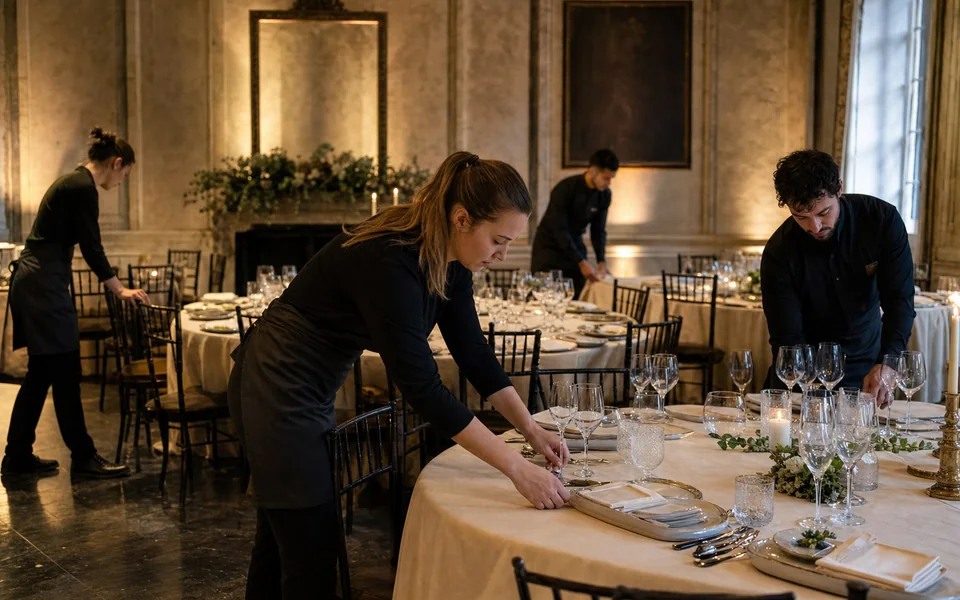
A team arranging a dining room before guests arrive

Somewhere between booking the date and counting chairs, hosting turns into a to-do list. It helps to remember why you’re doing it: to spend time with these people.

A few decisions made ahead of time will keep the day’s small questions from landing on you. You don’t need a perfect schedule, just enough of a plan that you can stop checking it.

Decide what matters most.

Pick the two or three things you’d be sad to miss. Maybe that’s a long, unhurried dinner, time with the cousins who flew in, or a packed dance floor. Use them to settle the decisions that come after.

If it’s conversation, keep the speeches short. If it’s dinner, don’t squeeze it between the toasts and the first dance.

Put the practical answers in one place.

Arrival times, delivery instructions, door codes, and phone numbers should all live in one shared document. Keep it simple enough that someone can find an answer while standing at the loading door.

Then go through it out loud with the people involved. That’s usually when someone notices the missing piece.

Pick one person to answer questions.

On the day, someone other than you should be the person vendors go to. That might be your planner, the venue coordinator, or a friend you trust to make a call. Make sure everyone knows who it is and what they’re allowed to decide.

Be just as clear about what your caterer is handling. Things fall through the cracks when everyone assumes someone else has them.

Leave some slack in the schedule.

Something will run long. Photos usually do, and toasts almost always do. A few spare minutes between the big moments mean nobody has to rush.

Ask your caterer and planner where they’d add time. They’ve seen which transitions look fine on paper and fall apart in practice.

Plan a few minutes for yourself.

Hosts forget to eat. Put time on the schedule to change, have something to eat, and sit down for five minutes before the first guest walks in.

Once people start arriving, stop checking the plan. That’s what everyone else is there for.

Let’s talk about your event

Planning something? We’d love to hear about it.

Start planning